War is irrational and stupid
While many see war as a terrible and often irrational act (no doubt its a stupid thing too), war is frequently treated by governments as some kind of ‘necessary evil’ in defending sovereignty or response to extreme aggression. The prevailing modern view, especially in the context of advanced, destructive weaponry, is that war is an inefficient and disastrous method of conflict resolution that humanity should outgrow. Even dictators are irrational on every level including war.
Explaining that war is irrational requires moving beyond a ‘war is bad’ argument and focusing on the structural and economic failures of warfare. War is a ‘lose-lose’ scenario where the costs almost always outweigh the benefits, even for the victor, no matter who they are or which country it might be.
The question of humanity’s irrationality in having war is complex. There are psychological, social, political, and historical factors. Historically war has been emergent, it developed over time and likely in eras where history has little understanding of what went on. In 2001 A Space Odyssey war is a result of an inspiration of sorts. An ape picks up bone and realises it can be used as a tool, and worse, use it as a weapon. In terms of humanity it could have been something perhaps like a curiosity or inspiration (much like Moonwatcher experienced upon encountering the monolith), and then conducting a sort of rudimentary investigation into what a bone could be for, other than merely lie on the ground as part of a collective of remains of a past animal. In a sense one could argue that Kubrick achieved one of the truest explanations (that apart from the monolith) of how violence and war had first originated. In a sense it can be argued that war had developed naturally.
The problem is what has now been developed. Instead of localised conflict war is now essentially global and one result of it is an almost instant annihilation right across the planet. There’s no doubt many other things that have developed over the course of human history are not good either. Pollution, environmental destruction, concreting everything over etc. The question is perhaps more crucially one of how humanity managed to establish many pitfalls as a ‘way of life’?
Its often argued that war arises from irrational motives such as greed, fear, prejudice, and no doubt it involves one outstanding factor – a desire for power. These motives can lead to conflict even when rational interests might suggest cooperation or peace would be more beneficial. Some suggest that war can be driven by rationale such as security concerns, resource extraction and other strategic advantages. In that way, war can be viewed perhaps as not purely irrational but rather being the tragic result of some sort of perverse rational decision-making. Even if its viewed that way the irrationality that emerges from such deduction cannot be overlooked.
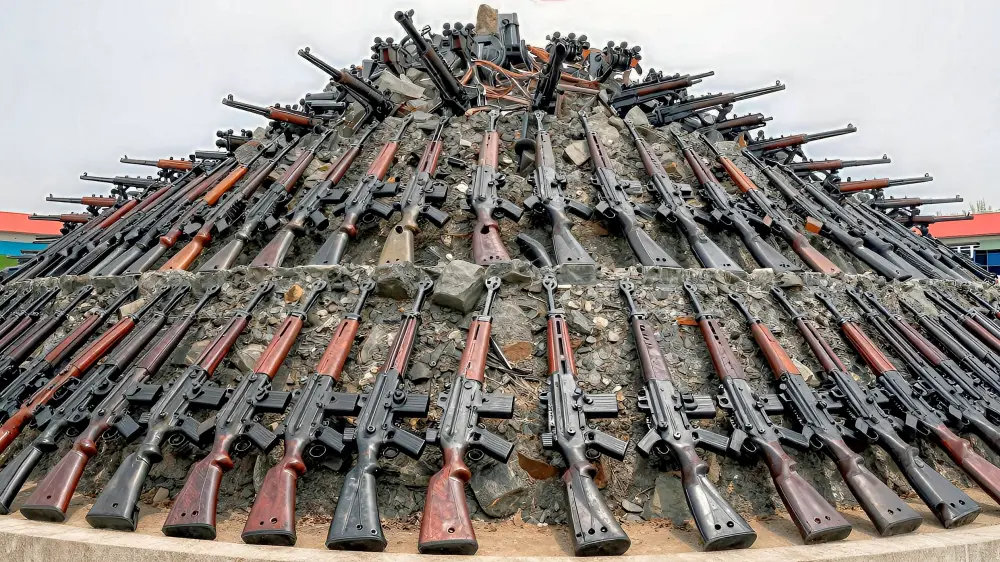
Memorials to war present a sane rationality when its anything but. Pretending any war is ‘normal’ is a sheer irrationality.
One of the strongest arguments against war is quite clearly economic. If a shopkeeper’s window is broken, it creates work for the glazier, and that ‘helps’ the economy. This common idea is wrong. Money must be spent fixing the window – instead it could have been spent on a new uniform or expanding the business.
There’s no doubt war destroys infrastructure, resources, and human lives. In the eyes of an economist these are all forms of capital. Some think the war machine is a profitable business. Its a biased perspective however when one considers the destruction, its obvious profitability is anything but. In the short term it might look good however that is as far as the illusion basically goes.
This weird rationale is something that’s held dear. The building of a tank or a bomb in a factory is seen as part of economic activity. It in fact turns out irrational and contrary to the notions an economist has because a tank creates zero value for society after the war (it has been destroyed for example). If the steel (and labour) used to build the tank was used for agricultural equipment or hospitals, that would give a lasting value.
The main objective of war clearly amounts to what is a destruction of wealth. Only an irrational species could contrive such an ideology!
In Game Theory, interactions are usually categorized into three types. War is almost always a ‘negative-sum game.’ The opposite of that, a positive-sum, would be something like ‘I give you shoes and you give me money. We are both happy.’ This is an exchange of values. One person needs one thing and the other a different thing and they both benefit.
The opposite of that would be Zero-Sum. A football match for example. In having one team win, the other must lose. That is what war is about, its zero sum – and perversely its both sides that lose even if there is a victor. Only an irrational species could see war as a positive sum game!
In a war, even the ‘winner’ loses personnel, money, and resources. A simple zero sum example goes thus – if one country spends £1 billion to destroy another, and that country spends £1 billion to destroy the invader, both countries are now £2 billion poorer.
It is clearly irrational, idiotic and no doubt its totally stupid for two countries to engage in an activity that leaves both parties worse off than if they simply had done nothing.
One cannot make a rational calculation if the outcome cannot be predicted. No-one knows the outcome of any war – except nuclear war. That is a very clear lose-lose situation where everyone dies. No-one wins. This is the Mutual Assured Destruction (MAD) theory that dominates the thinking behind nuclear defence.
Leaders and countries start wars assuming they will be ‘quick, cheap, and victorious.’ That’s a fallacy. Only an irrational species could think this way!
World War I (started by an assassination in Sarajevo) was one where everyone thought it would be over quickly. After four years it had resulted in the collapse of several empires and brought about millions of deaths.
There’s no doubt war removes control from the countries involved. Once war begins it follows its own chaotic logic. Evidently the outcome of war is emergent and barely reliant on any predictions made. Its a gamble of clearly unknowable odds. Only an irrational species could undertake such a destructive foray into the unknown!
Resources devoted to war are resources diverted (and even stolen) from solving far more tangible problems.
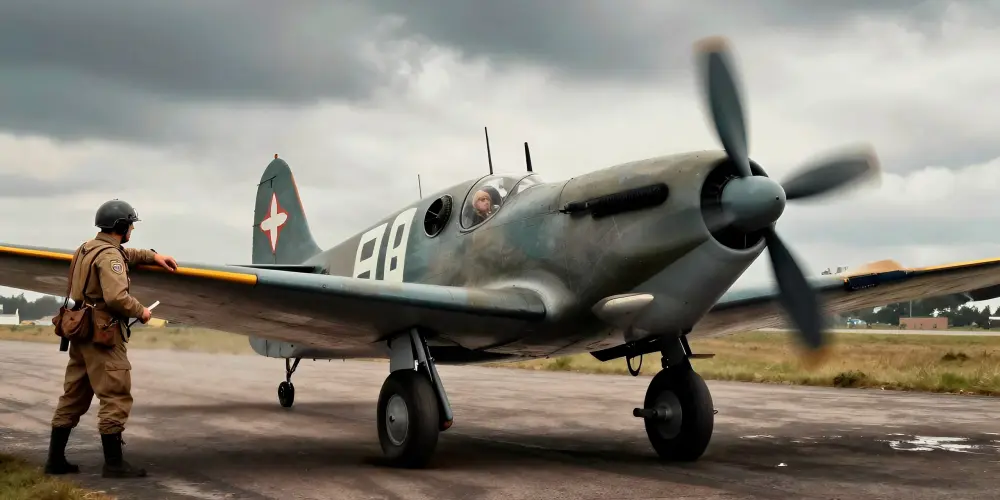
A retro fighter plane ready to take off. No matter whether its modern equipment or not, the idea of war is completely medieval.
A modern fighter jet costs millions. That could fund schools, hospitals, or even years of scientific research into curing disease. Its clear there’s no rationality in choosing the first over the others. Only an irrational species could conceive such a retrograde form of priority!
Humanity has faced many existential threats. These include climate change, pandemics and meteors from space. Numerous future threats pose a huge problem yet humanity is often little prepared. The battles ahead are enormous yet fighting each other is a most bizarre choice that humans make!
When even more pressing threats exist outside of its own sphere, only an irrational species chooses to fight within!
For those who care about national security and long-term safety the counter argument is war creates the problems it claims to solve. There’s no doubt war destroys infrastructure and governments and creates power vacuums. Instability follows and differing factions try to take advantage of this. ‘Hunger Games’ no doubt!
If the act of war equates a so-called ‘security,’ only an irrational species could devise new generations of enemies and conflicts.
Can there be anything more stupid, idiotic and irrational than humans and their wars?