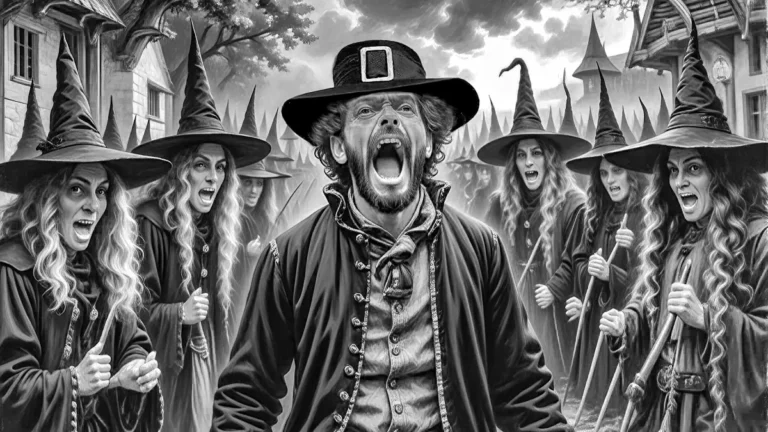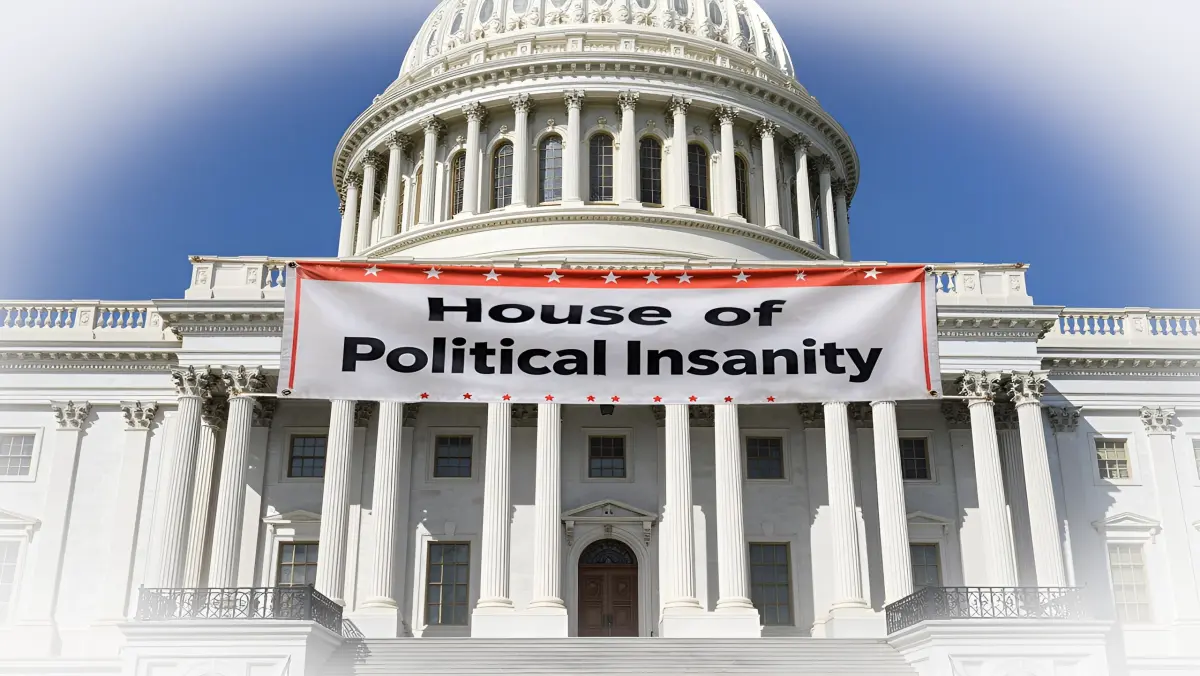
The idiocy of human politics + war
When it comes to the idiocy of this world, people can be either right or wrong about many things, and others in between somewhere. Of course one particular aspect continues to stand out and that is whether things are actually right or wrong. It is both a case of subjectivity and of following an ideology or particular strand of thought. Humans know how to trade ideas as well as goods, and there is often a benefit to it either way. In terms of subscribing to a particular ideology, it might be that some feel more powerful because there will be others who also subscribe to a similar means. Hence a benefit in that too. Its why war is so often a thing. Its somehow beneficial no matter what people think and the prognosis often entertains a necessity for war. ‘We must be prepared against the aggressors‘. Chamberlain’s ‘Peace in our time’ is perhaps a good example of why one must ‘prepare’ for war.
But its also a good example of how not to have war. Chamberlain thought appeasement was the solution, but as has often been shown, that rarely works. Sadly. And that because the aggressor is soon back for more. Thus the question is why must humans conduct war – or at the least, to be prepared for it? Clearly there’s a deficient mentality somewhere.
Some argue that war is a good thing because it resets societies. Essentially its about destruction and a phase of peace that follows – where there are attempts to rebuild and to make things better than before. Nevertheless, its a story that never ends. Could it be that humanity is under a sheer illusion when it comes to conducting war? Well, the prognosis is humanity is certainly stupid for it is unable to absolve a necessity for war. Even the UN, established after the Second World War in order to pursue peace, does not seem able to prevent wars occurring. Rather than getting together to devolve strategies against it, it seems the slightest upset causes countries to take up arms. And so it continues ad infinitum. Freud often discussed something he termed as Thanatos – humanity’s death wish.
The theory covering the death instinct, or Thanatos, suggests humanity invariably seeks activities that eventually causes its demise. It was developed by Freud to explain why people engage in aggressive and harmful behaviors. In a sense it does not matter whether its the individual (as Freud had postulated) or even a society as a whole, there is no denying that humanity seems predisposed towards conflict.
Freud theorized that the outward expression of the death instinct is aggression, which seeks to destroy connections and disrupt stability. This constant interplay between destruction and connection shapes much of human experience. 1
The desire for war is no doubt driven by various factors, but if humanity were really clever, as it often prides itself on an intellectual superiority that is elevated high above other species, surely humans would seek the desire to end war? In a sense it all comes down to the idea of borders, politics and a matter of governance. And those are often where the desire for war begins.
In that case, there’s certainly no doubt that two people, one in the UK and one in France/the USA, are right when they take on the idiocy of the need for war and the sheer narcissism that exists in politics – these are Jeremy Corbyn and Hélène Landemore. Both are experts on warfare and politics repectively. A third is also right in how countries get ‘upset’ and rapidly take up arms – such as at the start of World War One. This third person is Odd Arne Westad.
This triad of experts, despite the different areas they work in, clearly highlight political traits that propel a sheer insanity. Corbyn has often extolled the need for spending at home on housing, welfare etc rather than on the military. Westad discusses war and how sheer moments of insanity start it off. He says that the world’s leaders are inexperienced and unable to deal with critical situations and that has invariably been the case for decades. Westad expresses concern upon a potential unforeseen global crisis triggering war, comparing today’s situation to 1914 when leaders lost control of events. He also argues argues that terrorism and misjudgments today could similarly spiral out of control, plus the ignoring smaller ongoing conflicts, such as Iran, Ukraine, and regional wars – which are often wrongly assumed to be isolated.
Hélène Landemore, Professor of Political Science at Yale University, 2 regularly extolls the problems of what is deemed to be democracy – and as a result of that – she also discusses the problem of despots and manics in power – how political power can be amassed and abused indirectly. It is plain from her theories that politics is problematic and the view of her work is one can deduct that politics often leads to what can only be illiberal regimes, despots and crazed nutjobs who want nuclear annihilation. Her recent book ‘Politics without the Politicians: The Case for Citizen Rule’ has caused quite a bit of interest.
Of course war is a sheer insanity and it depends on the arrogance of politics. Instead of being able to iron out differences and see others in a more quantifiable, venerable, light, politicians are largely a dense bunch who think they KNOW what’s best for their countries/the world. So there’s a huge focus on defence – essentially a plan for war – at the behest of welfare. Its a maladjusted mentality. One can never begin to understand the mentality which focuses on war – but it exists and in the main most politicians go along with it. In a sense they are war’s cheerleaders.
Jeremy Corbyn 3 is an exception for he has long campaigned against war and was involved in the anti-nuclear stance during the 1970s. There is simply no sense in ‘voting’ for war, but this is what both politics and democracy does. Its why Corbyn often remains an outsider in the world of politics, against the flow that most other politicians pursue.
There is only one real winner of increased military spending: the profiteers of war. We are told that military spending can be “a driver of economic growth.” What this really means is that taxpayers’ money will be paid directly to arms companies, who have a stake in an endless arms race to fuel the conflicts around the world… There is no glory to war — there is only death and destruction. When leaders neglect to use the language of peace, they should remember that it’s those who are sent to die on the battlefield who end up paying the price… We are trapped in an endless, global arms race. Together, we must break the cycle to trigger a new path: toward disarmament, de-escalation and peace… Security is not the ability to threaten and destroy your neighbour. Real security is getting on with your neighbour. It’s when human beings are not displaced by poverty. It’s when our children can be confident that they will grow up in a habitable world — a world not of endless war, but of lasting peace. 4
If war is such a necessity, why is there democracy? Surely democracy would see to it that war was not on any political agenda? As this IAI talk 5 with Bacchus, Landemore and Roth shows, its clear democracy has been anything but. The kinds of democracies we have do not bring about a sensible level of discourse, planning or thinking more about the actual welfare and sanity of a country. Democracy is about the politician as self and not the person in the street.
We see this more and more – for example in both Trump and Putin. Both are crazily malevolent. They have gained power by way of a democratic means, and for differing reasons, both are a considerable danger to the world. It seems democracy exists only to purpose leaders whose brains happen to be at an obtuse angle to everything else. Interestingly both seem to have a desire for war and land grabs, no matter what they may say. Trump has his eyes on Greenland whilst Russia simply takes other countries.
In a realist sense no country has a right to exist – land has never been humanity’s to start with – each and every country exists only by decree of certain boundaries placed at certain locations – and then the land within called a country. These are hence a figment of the human imagination, and in that respect war ought to be a figment too. Sadly humans do not work out such simplicity in the world, but they prefer the art of complicating matters.
Hence we have the concept of countries, politics and war – a triad that presents huge problems. Certainly in the olden days, the time of the Romans, the Barbarians and long before, humanity has always fought others of the same species. It has always fought its own brothers and sisters. The human brain seems to think in a way that is predestined towards survival and that was something that existed long before the days of Christ, but this has come at a cost increasingly as humanity progressed through the various centuries since. Military campaigns have become more and more sophisticated, the Battle of Troy for example, with its Wooden Horse being a celebrated one. There are many other examples but what these do is elevate an admiration upon human ingenuity and the skills with which soldiers and generals have plotted the downfall of the opposing side.
Its all a disease essentially. Instead of phasing out war, and of fostering a focus on a world where conflict is barely present, humanity has steadily progressed towards annihilation by way of a continued predilection for war. One can see how this momentum had effected what was, for want of a proper sense, something of a phase transition. A recent discussion on The Rest is Politics 6 had Alastair Campbell and Rory Stewart interview Odd Arne Westad 7 on the causes of war. Westad discusses the events leading up to WWI and describes how society was in fact primed for such an event and that is because, essentially, the ability was built in – or perhaps rather, it was a result of sheer distrust and suspicion generated no doubt by an atmosphere of fear and indifference – because essentially humanity is a species based on distrust.
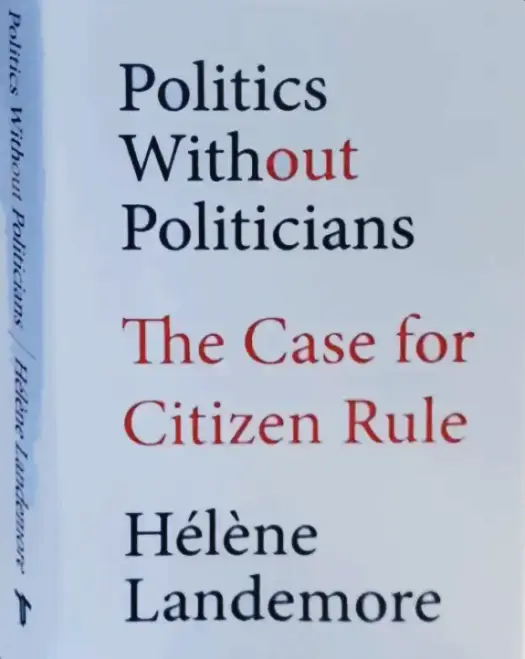
Politics without the Politicians: The Case for Citizen Rule. Hélène Landemore. Published February 2026.
Distrust is no doubt something politics adores. We come back to Hélène Landemore, who says politics is based on a distrust of the general populace. Politicians think the person in the street could never be trusted to administer a country’s political mechanisms, so politicians are in fact removed from the desires of their subjects – and democracy becomes a sham because its about the politicians and their notions – and never really the populace at large. Its why Hélène Landemore says there’s no such thing as democracy – because politics has an elitist problem. 8 For democracy to work politics must be more at grassroots level. But what happens is elections tend to favor individuals with dark triad traits (such as narcissism, Machiavellianism, and psychopathy) who tend toward manipulation and power-seeking. These politicians are no doubt (at the start anyway) seen by their electors as professionally adept and therefore capable of the task they are elected to do. But rarely they do what they say they will and most turn out to be a disappointment.
To interject, from my perspective (and no doubt that of others too) its clear in the current political climate and the person in the street’s hatred of the whole political scene, the question has to be – when has a politician certainly kept to their true honour and roots? Despite the sheer indifference in the US and UK leaderships, one can see how both countries (this being Starmer and Trump) have seen events that turned out to be to total opposite of what had been promised in the run up to the election. In the UK Starmer had promised no price rises in energy and pensions would be protected. These and other things have not been honoured. Both the working class and middle classes have essentially been shafted and its why now people are despairing of politics and voting for just about anyone else that comes to mind. The two horse political race in both countries is most likely finished and that certainly has to be down to political arrogance.
Landemore says there is evidence that by electing people (basically electing ‘experts’ so to say) politics becomes a sham and in no way can it be democratic. The evidence also shows that if people were to choose a leader at random, that is, out of necessity, what happens is its a leader with a more truthful and honest outlook on leading others, what Landemore describes as a greater hubris. In the normal sense of democracy voting for a leader does not formulate that but rather incurs a figurehead who is narcissist and has ideas way above their station.
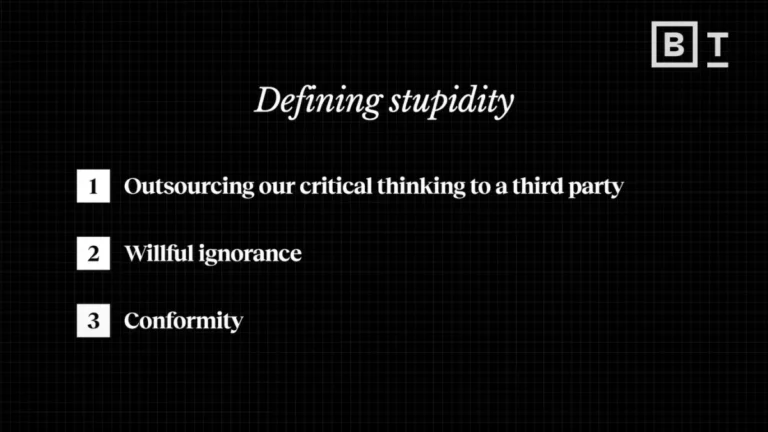
Landemore’s view is modern society lacks faith in the average citizen’s capacity to govern, often fearing the influence of extreme or disruptive individuals. Thus politics is a very low trust system. The electorate simply cannot be trusted. And its why there’s an alarming increase in state surveillance. From a personal perspective, its is evident that one can begin to see they ways in which human societies and political systems and governments promulgate a culture of stupidity – even though politicians might think Parliament or the Senate are the planet’s best democratic institutions!
In my estimation political elitism can be seen to extremes in Russia. Putin does not trust the person in the street in any way or form. Democracy requires trusting people first. Political rights should at the fore. This, coupled with certain ‘duties’ and a focus towards a pre-envisaged idea of what politics and globalisation is all about will no doubt have further impact. In other words, land grabs, owning other countries, a spending sprees on the military and a system of control upon the electorate amounts to anything but democratic.
Landemore adds further that many politicians do not actually devise ideas and laws and guidance. They often draft what are outlines then delegate these to others who will do the drafting of the texts that demonstrate the need for a new law, a new funding endeavour, a national project, and so on. Landemore basically says that this shows politicians are shenanigans because they deem they have a profession, but being in a political notation takes far more than just being a profession. Inevitably it means the wrong type of person – this being the one in the street – should not ever be allowed to become a politician. Clearly in order to be a true democracy, politics must trust citizens first and competence follows participation. Politics ought to be civic duty, this being ordinary citizens, and not just professionals, should be able to govern. It means serving, not ruling. Politics should seen as a public service, and not a thing for personal power.
Other aspects of what claims to be democracy, as Landemore defines, are a lack of true participation: Current political systems suffer from either pseudo-democracy or competitive oligarchies, and in these instances, ordinary citizens lack meaningful influence over decisions that are made by state departments or governments.
On the whole at this very point in time, we can now see different emergent ideas that are beginning to challenge the old and tired ways of running and conducting politics (and that includes war and conflict). One can say the current political systems contain parameters that entail what can only be dangerous endeavours – and Governments and leaders seemingly have no clue as to what is what.
In a sense its a bit like factory farming and other things. The ideal motive becomes more and more proficient but at the same time more destructive. Yet it is evidently hard for those involved in such endeavours to be able to see the damage they are causing. ‘Humane’ (as used in factory farming and even animal experimentation) is a misnomer and yet its used to pass off what can only be a sheer genocide, or an abject horror perpetuated against vulnerable living creatures. Its known the industry attempts to make the whole endeavour somehow seem quite normal. Similarly, a distorted, maligned rhetoric is used to ennoble the destruction of Gaza, and also to justify wars and other conflicts.
People of talk of human ingenuity and the rest of it – there is no doubt humans have come up with splendid innovations but on the whole humanity is considerably let down by what can only be sheer stupid endeavours. Many are no doubt largely propped up by the political machine – not forgetting the 10% of people who have the money – yes the money men, those with billions – and even trillions – as Elon Musk is now. 9 These all have the clout to ensure that things go their way and not they way of the person in the street. Essentially exploitation and subterfuge all around. Of course politicians also permit the generative machine that is the arms race because more defence spending means more work for the weapons industry and war of course elevates that work too.
What it means is war is always a case of one side doing better than the other and in the process what it does is actually up the ante and the war machine becomes even more fearful and effective – which no doubt means a far worse destruction too. Many countries see war as a festival (parades, military celebrations, pride at one joining the army, navy etc) and that does not help. Numerous statues of generals and other military campaigners celebrate war and it conveys a sort of dreamy notion that war is romantic. The subtlety of it all is that war is without a doubt good and honourable. No-one says its mad. But it is. War is regularly presented in what can only be a ‘humane’ sense and in the face of that sheer might, it takes effort to show what is no doubt the completely unsavoury side of war. Besides, its not just the nuclear threat that is mad but the whole essence of the war machine too. Its an unstoppable monster. There’s no doubt the madness of politicians is a major cause of war. Not only that, its a result of a human mind that is backwards and stupid.
References:
- Death Instinct: Understanding Freud’s profound theory and its modern relevance ↩︎
- Wikipedia: Hélène Landemore ↩︎
- Wikipedia: Jeremy Corbyn ↩︎
- Jeremy Corbyn & Stop the War Coalition. We need to build a world of peace, not ever ending war ↩︎
- Institute of Art and Ideas: We’ve never had true democracy ↩︎
- The Rest is Politics: The Storm Before The World War? Odd Arne Westad ↩︎
- Wikipedia: Odd Arne Westad ↩︎
- TED Podcasts: Why politics have an elitism problem with Hélène Landemore ↩︎
- BBC News: Elon Musk becomes world’s first trillionaire as SpaceX soars in stock market debut ↩︎